
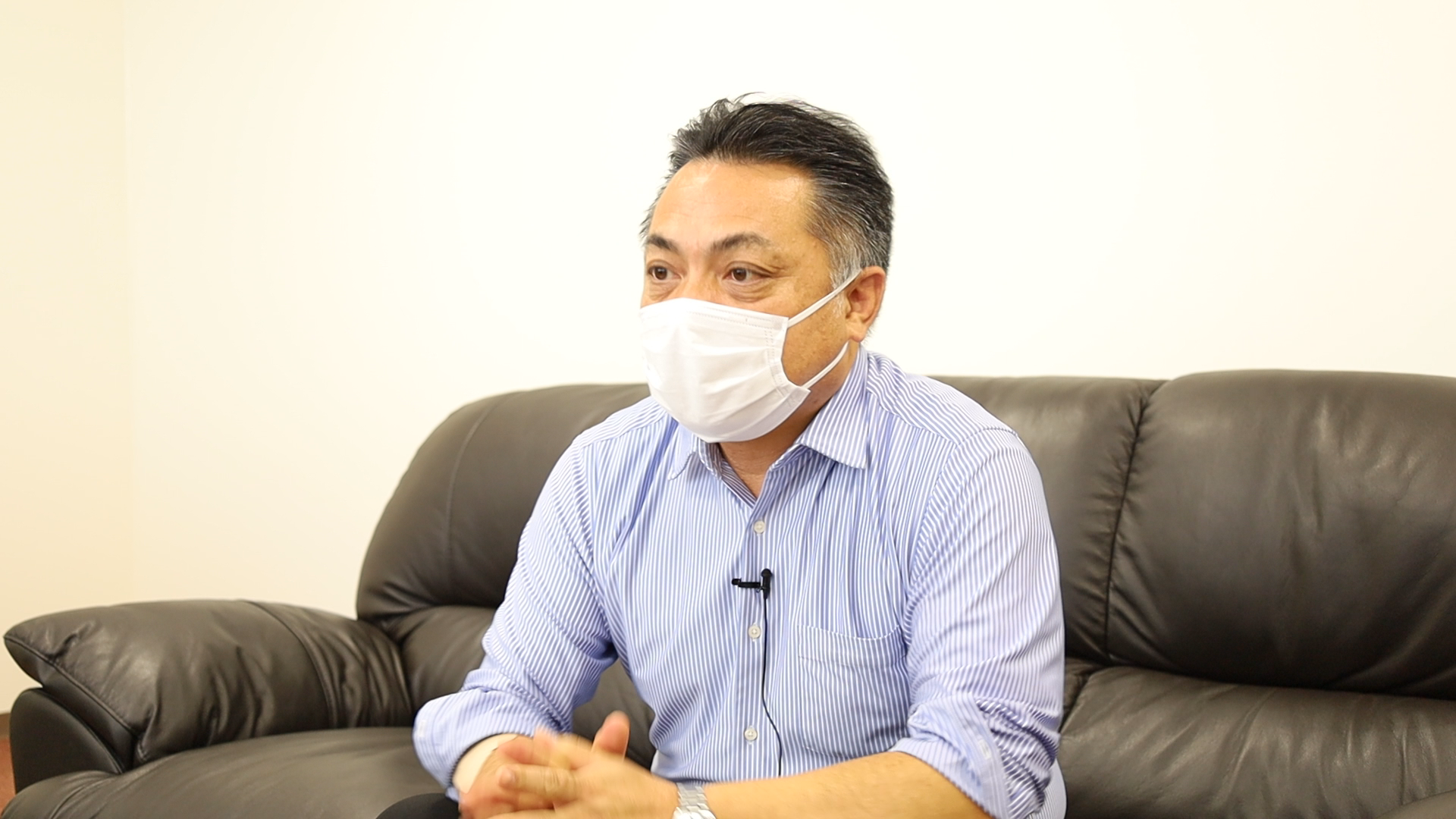
Following a request from a client, we initially considered manual peeling. However, after seeing ASTRA’s peeling technology, we decided that implementing their machinery was the best solution for our needs.
Pineapple skin often harbors various bacteria, such as general viable bacteria, coliform groups, and Staphylococcus aureus. If workers touch the skin and then the fruit, it creates a risk of cross-contamination. Therefore, we determined that it is best to avoid direct contact between the skin and the flesh.
By implementing the KA-750PM series, we can peel the fruit without touching the flesh, allowing us to clear the strict hygiene standards required for cut fruit products.
1. Washing & Disinfection: Pineapples are placed in a sink filled with disinfectant.
2. Preparation: The top (leaves) and bottom are cut off.
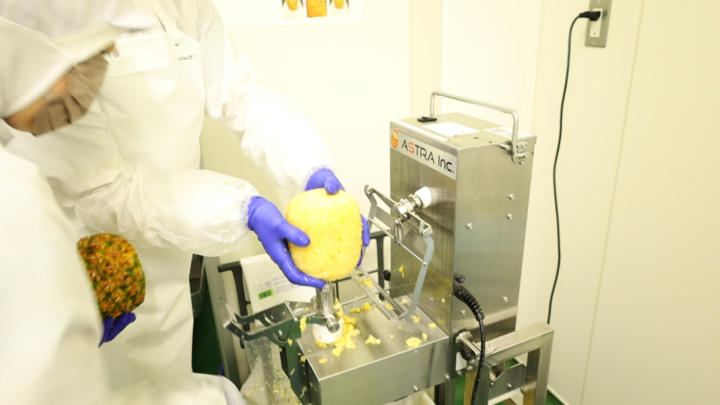
3. Peeling: The pineapple is set into the machine, and the peeling process starts.
4. Removal: The peeled fruit is removed from the machine.
5. Trimming: Any remaining “eyelets” are trimmed manually.
6. Packaging: The trimmed fruit is packed for shipping.
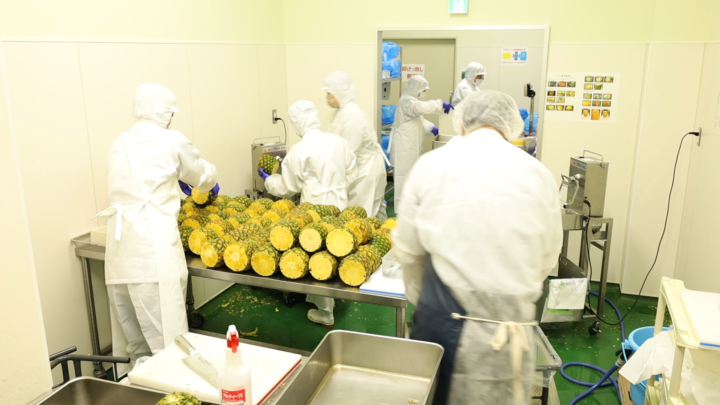
We have achieved strict hygiene management by separating the workflow: steps 1–3 are the “Skin Contact Section,” and steps 4–6 are the “Fruit Contact Section.”
Tasks can be divided between skin handling (foreground) and fruit handling (background)
Initially, we expected a yield of less than 50% with manual peeling due to individual differences in worker skill.
By implementing the KA-750PM series, we have achieved a consistently high yield regardless of the operator’s experience or skill level.
We currently process and ship approximately 25,000 pineapples per month. Compared to the period before implementation, we have successfully reduced our daily working hours by an average of 1 to 1.5 hours.
 Before Purchase

After Purchase



 Japanese